Tuesday, July 15, 2014

HISPANICS WRONGLY ACCUSED:

HISPANICS WRONGLY ACCUSED:


EXECUTED: Ruben Montoya Cantu (December 5, 1966 – August 24, 1993) was a Texan who was executed for murder. During the years following the conviction, the surviving victim, the co-defendant, the District Attorney, and the jury forewoman have all made public statements that cast doubt on Cantu's guilty verdict and death sentence.

EXECUTED: Carlos DeLuna—in 1989, DeLuna was executed for the stabbing of a Texas convenience store clerk. Almost 20 years later, Chicago Tribune uncovered evidence that shows DeLuna was likely innocent. The evidence showed that Carlos Hernandez, a man who even confessed to the murder many times, actually did the crime.


EXECUTED: Jesse Joseph Tafero (October 12, 1946 – May 4, 1990), was convicted of murder and executed via electric chair in the state of Florida for the murders of Florida Highway Patrol officer Phillip Black and Donald Irwin, a visiting Canadian constable and friend of Black. The officers were killed during a traffic stop where Tafero, his girlfriend Sunny Jacobs, and their children were passengers. The driver, Walter Rhodes, confessed to shooting the officers after Tafero's execution.

INCARCERATED: Gilbert Alejandro (1990) Served 4 years was convicted of aggravated sexual assault in Ulvade County, Texas, in 1990. He was freed in 1994, one of many innocent men who had been convicted due to false testimony by Fred Zain.

INCARCERATED:  Orlando Boquete on May 23, 2006, Orlando Boquete’s conviction for attempted sexual battery and burglary was vacated. DNA testing on the victim’s clothing proved that he was not the man who committed the crime. His release from state custody was delayed until August 22, 2006, when he was released from the custody of the Immigration and Customs Enforcement Agency.

INCARCERATED:  Mark Bravo Sentenced to 8 years – Served 3 years. On February 20, 1990, Mark Bravo was working as a nurse at the Metropolitan State Hospital in Los Angeles. A long-time patient at the hospital approached a guard and said she had been raped that afternoon. She named several people as her attacker, including Bravo, when she was interviewed by hospital authorities. He was arrested the next morning and charged with rape. Bravo maintained a strong alibi. He said that he left the hospital at 11:00AM and had not returned until after 12:30 PM. He had been in meetings from 1:00PM until after 3:00PM. He claimed that he went home that night not knowing that anyone had been raped that day.

INCARCERATED:  Ulysses Rodriguez Charles Served 17 years in 2001, Ulysses Rodriguez Charles was released from prison after serving 17 years for aggravated rape, robbery, unlawful confinement, and entering armed with intent to commit a felony. His conviction was vacated after DNA testing of semen found on the victim’s bed sheets excluded him. Charles asserts that he had been targeted by a police officer with a vendetta who hid evidence in pursuit of his wrongful conviction.

INCARCERATED:  Luis Diaz Served 25 years On August 3, 2005, Luis Diaz was released from Florida prison after serving 25 years for crimes he did not commit. Diaz was convicted in 1980 as the "Bird Road Rapist." Between 1977 and 1979, over 25 women were attacked in the Bird Road area of Coral Gables, Florida. Many were sexually assaulted after being stopped in their cars. After a highly publicized investigation, Diaz was arrested and charged with 8 rapes attributed to the Bird Road Rapist. In 2005, after 25 years of protesting his innocence, post conviction DNA testing provided powerful proof that Luis Diaz was wrongfully convicted.

INCARCERATED: Alejandro Dominguez served 4 years in 1990, Alejandro Dominguez, and then a 16 year-old Mexican national, was convicted and sentenced to 9 years in prison for the rape of a white woman in Illinois. Dominguez served four years of a nine year sentence. After Immigration and Naturalization Service threatened to deport him for failing to register his conviction in 2001, he sought DNA testing, at his own expense, to prove his innocence. Dominguez was officially exonerated on April 26, 2002, after DNA testing proved that he could not have deposited the semen left by the perpetrator.

INCARCERATED: Hector Gonzalez served 5 years Hector Gonzalez was arrested in December of 1995 and charged with murder. More than five years later, DNA testing proved crucial in establishing his innocence and securing his release. Gonzalez was released on April 24, 2002, after having served over five years of his sentence.

INCARCERATED:  Kathy Gonzales served 5 years Kathy Gonzales agreed with prosecutors to plead guilty and testify falsely to her alleged role in the crime at the trial of co-defendant Joseph White in exchange for a shorter sentence. She was sentenced to 10 years in prison and freed in 1994 after serving nearly five years. She was pardoned in January 2009. 

INCARCERATED: Carlos Lavernia served 15 years In August of 1984, Carlos Lavernia, a Cuban immigrant, was arrested for the rape of a twenty-four year-old woman in Austin, Texas. Austin police linked Lavernia to seven other assaults and charged him as a serial rapist. The principal evidence used to convict Lavernia was the victim's identification of him as the assailant. Only after DNA testing was performed in 2000, fifteen years after he began his sentence was Lavernia able to prove his innocence. Throughout his trial and during his fifteen years in prison, Carlos Lavernia maintained his innocence.

INCARCERATED: James Ochoa Served 10 months Ten months after he pled guilty to carjacking and armed robbery, James Ochoa’s sentence was vacated by a judge and he was released from prison. Though Ochoa had already been excluded from the DNA evidence at the time of trial, prosecutors were sure he did the crime. A routine run of DNA profile from the crime scene evidence through the national CODIS DNA database matched a man in custody for carjacking and who subsequently confessed to this crime, exonerating James Ochoa.

INCARCERATED:  Chris Ochoa served 11.5 years. Nancy DePriest was raped and murdered in her work place in Austin, Texas in 1988. Chris Ochoa pled guilty to the murder of DePriest and his friend, Richard Danziger, was convicted of rape. Ochoa had confessed to the crime and had implicated Danziger. It would be discovered, however, that his confession was coerced and that neither man had anything to do with the slaying or raping of DePriest.

INCARCERATED:  Ricardo Rachel served 5.5 years.  Ricardo Rachel was convicted in 2003 of a Houston child sexual assault he didn’t commit. Although DNA testing was available at the time of his arrest and a sample was collected from Rachell, no testing was conducted before his trial. He served more than five years before DNA testing proved his innocence and led to his release on December 12, 2008.

INCARCERATED:  John Restivo served 16 years. In June 2003, the convictions of Dennis Halstead, John Restivo, and John Kogut were all vacated, and the three defendants were released. In 1986, Halstead and Restivo were tried separately from Kogut, who was also tried and convicted of rape and murder on the theory that the three men had acted together in abducting, raping, and killing the victim. A series of post conviction DNA tests excluded all three men as the rapists and proved that semen from the victim’s body had come from unknown assailant.

2 Florida Cops Fired After FBI Ties Them To KKK

2 Florida Cops Fired After FBI Ties Them To KKK

Sunday, July 13, 2014

Come on FoxNews- This isn't even newsworthy! Soon being Hispanic is going to be probable cause for an arrest.

Can we have some proof that this really happened? This is not even newsworthy


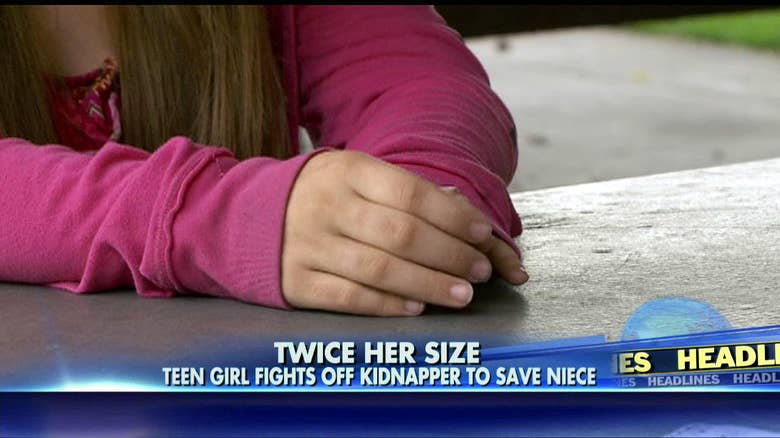
Utah Teen Fights Off Kidnapper to Save Her 12-Year-Old Niece

A Utah teenager fought off a man nearly twice her size who tried to kidnap her 12-year-old niece.

The teen, who asked that her identity not be released, said she hit the assailant after he tried to abduct her niece.


Come on now this is ridiculous! Soon being Hispanic is going to be probable cause for an arrest.


I DON'T BELIEVE IT. I've raised 4 children and have 4 grandkids and this sounds like a child's war story. It doesn't ring true. BEFORE YOU SWALLOW THIS TALE LOOK AT THE DESCRIPTION OF THE PERP:

The suspect is described as a HISPANIC male who stands 5-feet, 11-inches tall and weighs about 235 pounds. He had a mustache and short, black hair. The man was driving a black Chevy Tahoe SUV with shiny rims that had black centers. He was last seen wearing blue jeans, a maroon jersey and white shoes.

Anyone with information regarding the incident or the suspect is asked to call Unified Police Department officials at 801-743-7000

It used to be a black, whenever they needed a perp. Now it's Hispanic. The new flavor is HISPANIC. The children are only mimicking the adults around them who’ve been doing this for decades.

Let’s take a look on inventing non white perpetrators in America:

Ashley Todd, Pennsylvania, 2008 This crazy, overweight, young Republican thought it would be a good idea to carve a backwards B on her face and blame it on a Black Barack Obama supporter. Police investigated her story and found out it was B.S.

Charles Stuart, Massachusetts, 1989 Charles Stuart shot himself and killed his pregnant wife for insurance money and blamed it a Black man. After the police arrested several Black men on suspicion of being involved in the incident, Stuart’s brother admitted that he was involved his brother’s wife’s killing. Charles Stuart later committed suicide.

Susan Smith, South Carolina, 1994 Susan Smith claimed that a Black guy hijacked her car with her kids in it. She went on TV and received a lot of media attention. She would later admit to rolling her car into a lake, with her children in it. Why? So she could start her life over by marrying a wealthy man without having the burden of her old family.

Brian Wells, Pennsylvania, 2003 Pizza deliveryman Brian Wells came to a bank in Erie, Pa. with a bomb locked around his neck. He told police that group of Black men had taken him hostage and put the bomb there. After receiving close to $9,000, the pizza man was blown to bits by the bomb. Police would later find out that Wells was in on the plot with a few of his white friends.

Bonnie Sweeten, Pennsylvania 2009 Sweeten was found in Disney World after claiming that she and her daughter were abducted by two Black men.

HISPANICS WRONGLY ACCUSED:


EXECUTED: Ruben Montoya Cantu (December 5, 1966 – August 24, 1993) was a Texan who was executed for murder. During the years following the conviction, the surviving victim, the co-defendant, the District Attorney, and the jury forewoman have all made public statements that cast doubt on Cantu's guilty verdict and death sentence.

EXECUTED: Carlos DeLuna—in 1989, DeLuna was executed for the stabbing of a Texas convenience store clerk. Almost 20 years later, Chicago Tribune uncovered evidence that shows DeLuna was likely innocent. The evidence showed that Carlos Hernandez, a man who even confessed to the murder many times, actually did the crime.


EXECUTED: Jesse Joseph Tafero (October 12, 1946 – May 4, 1990), was convicted of murder and executed via electric chair in the state of Florida for the murders of Florida Highway Patrol officer Phillip Black and Donald Irwin, a visiting Canadian constable and friend of Black. The officers were killed during a traffic stop where Tafero, his girlfriend Sunny Jacobs, and their children were passengers. The driver, Walter Rhodes, confessed to shooting the officers after Tafero's execution.

INCARCERATED: Gilbert Alejandro (1990) Served 4 years was convicted of aggravated sexual assault in Ulvade County, Texas, in 1990. He was freed in 1994, one of many innocent men who had been convicted due to false testimony by Fred Zain.

INCARCERATED:  Orlando Boquete on May 23, 2006, Orlando Boquete’s conviction for attempted sexual battery and burglary was vacated. DNA testing on the victim’s clothing proved that he was not the man who committed the crime. His release from state custody was delayed until August 22, 2006, when he was released from the custody of the Immigration and Customs Enforcement Agency.

INCARCERATED:  Mark Bravo Sentenced to 8 years – Served 3 years. On February 20, 1990, Mark Bravo was working as a nurse at the Metropolitan State Hospital in Los Angeles. A long-time patient at the hospital approached a guard and said she had been raped that afternoon. She named several people as her attacker, including Bravo, when she was interviewed by hospital authorities. He was arrested the next morning and charged with rape. Bravo maintained a strong alibi. He said that he left the hospital at 11:00AM and had not returned until after 12:30 PM. He had been in meetings from 1:00PM until after 3:00PM. He claimed that he went home that night not knowing that anyone had been raped that day.

INCARCERATED:  Ulysses Rodriguez Charles Served 17 years in 2001, Ulysses Rodriguez Charles was released from prison after serving 17 years for aggravated rape, robbery, unlawful confinement, and entering armed with intent to commit a felony. His conviction was vacated after DNA testing of semen found on the victim’s bed sheets excluded him. Charles asserts that he had been targeted by a police officer with a vendetta who hid evidence in pursuit of his wrongful conviction.

INCARCERATED:  Luis Diaz Served 25 years On August 3, 2005, Luis Diaz was released from Florida prison after serving 25 years for crimes he did not commit. Diaz was convicted in 1980 as the "Bird Road Rapist." Between 1977 and 1979, over 25 women were attacked in the Bird Road area of Coral Gables, Florida. Many were sexually assaulted after being stopped in their cars. After a highly publicized investigation, Diaz was arrested and charged with 8 rapes attributed to the Bird Road Rapist. In 2005, after 25 years of protesting his innocence, post conviction DNA testing provided powerful proof that Luis Diaz was wrongfully convicted.

INCARCERATED: Alejandro Dominguez served 4 years in 1990, Alejandro Dominguez, and then a 16 year-old Mexican national, was convicted and sentenced to 9 years in prison for the rape of a white woman in Illinois. Dominguez served four years of a nine year sentence. After Immigration and Naturalization Service threatened to deport him for failing to register his conviction in 2001, he sought DNA testing, at his own expense, to prove his innocence. Dominguez was officially exonerated on April 26, 2002, after DNA testing proved that he could not have deposited the semen left by the perpetrator.

INCARCERATED: Hector Gonzalez served 5 years Hector Gonzalez was arrested in December of 1995 and charged with murder. More than five years later, DNA testing proved crucial in establishing his innocence and securing his release. Gonzalez was released on April 24, 2002, after having served over five years of his sentence.

INCARCERATED:  Kathy Gonzales served 5 years Kathy Gonzales agreed with prosecutors to plead guilty and testify falsely to her alleged role in the crime at the trial of co-defendant Joseph White in exchange for a shorter sentence. She was sentenced to 10 years in prison and freed in 1994 after serving nearly five years. She was pardoned in January 2009. 

INCARCERATED: Carlos Lavernia served 15 years In August of 1984, Carlos Lavernia, a Cuban immigrant, was arrested for the rape of a twenty-four year-old woman in Austin, Texas. Austin police linked Lavernia to seven other assaults and charged him as a serial rapist. The principal evidence used to convict Lavernia was the victim's identification of him as the assailant. Only after DNA testing was performed in 2000, fifteen years after he began his sentence was Lavernia able to prove his innocence. Throughout his trial and during his fifteen years in prison, Carlos Lavernia maintained his innocence.

INCARCERATED: James Ochoa Served 10 months Ten months after he pled guilty to carjacking and armed robbery, James Ochoa’s sentence was vacated by a judge and he was released from prison. Though Ochoa had already been excluded from the DNA evidence at the time of trial, prosecutors were sure he did the crime. A routine run of DNA profile from the crime scene evidence through the national CODIS DNA database matched a man in custody for carjacking and who subsequently confessed to this crime, exonerating James Ochoa.

INCARCERATED:  Chris Ochoa served 11.5 years. Nancy DePriest was raped and murdered in her work place in Austin, Texas in 1988. Chris Ochoa pled guilty to the murder of DePriest and his friend, Richard Danziger, was convicted of rape. Ochoa had confessed to the crime and had implicated Danziger. It would be discovered, however, that his confession was coerced and that neither man had anything to do with the slaying or raping of DePriest.

INCARCERATED:  Ricardo Rachel served 5.5 years.  Ricardo Rachel was convicted in 2003 of a Houston child sexual assault he didn’t commit. Although DNA testing was available at the time of his arrest and a sample was collected from Rachell, no testing was conducted before his trial. He served more than five years before DNA testing proved his innocence and led to his release on December 12, 2008.

INCARCERATED:  John Restivo served 16 years. In June 2003, the convictions of Dennis Halstead, John Restivo, and John Kogut were all vacated, and the three defendants were released. In 1986, Halstead and Restivo were tried separately from Kogut, who was also tried and convicted of rape and murder on the theory that the three men had acted together in abducting, raping, and killing the victim. A series of post conviction DNA tests excluded all three men as the rapists and proved that semen from the victim’s body had come from unknown assailant.

Thursday, July 10, 2014

TOY DRONES” ARE NO JOKE


“TOY DRONES” ARE NO JOKE:

These mini-aircraft can be bought off the shelf. They can be much more deadly than firearms; they are a clear and present danger to the public and the government.
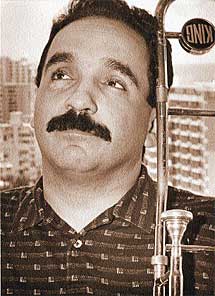
Willie Colón


In the 1960s these gizmos were the stuff of Peter Graves and Peter Lupus on Mission Impossible, pure sci-fi. They would fly through the air-conditioning ducts to perform amazing rescues and sabotage against the bad guys.


In 2014 you can buy a drone at most hobby and toy stores starting at about $35.00.


Last week two drones almost collided with an NYPD Chopper over the George Washington Bridge at approximately 2000’. From the GWB south you have a complicated Traffic Control Area. There are three busy airport control areas overlapping: Kennedy-JFK, LaGuardia-LGA and Newark-EWR plus Teeterboard-TEB, a General Aviation Airport. This area is very tightly controlled and no place for an idiot (hundreds of idiots) who doesn’t have a clue to be flying remote controlled drones through. There must be a quick and strong reaction to these offenses. The possibility of causing a calamity of apocalyptic consequences makes me tremble. We’ve got hundreds of large low flying aircraft over a highly populated area every couple of minutes.

But the threat doesn’t end there. These drones present a privacy issue. They come with a built in camera so you could hover a drone to spy on a competitor or stalk someone. Worst of all you can use them for terrorism. An inexpensive way to get over fences and in backyards to cases places for strategies on how to attack them. There have already been several incidents at public places where people have used to drones to sexually harass. These drones can serious physical injury when flown over and through crowded areas. Amatuer pilots could never predict wind conditions and peoples movements and reactions.

WOMAN CLAIMS TO BE HARASSED AT VIRGINIA BEACH
Video: Drones being used by peeping Toms?


Homeland Security in recent days has alerted the public about cell phones. Apparently they have learned that there is a possibility that terrorist have found an explosive powerful enough to be a serious threat in the small amount that could fit in a cell phone. That means that you could probably find a hobby drone that could deliver such a small deadly payload.

I don’t usually support government intervention like this but I believe that this technology in the wrong hands is a clear and present danger. I suggest that the authorities: FAA, DHS, LOCAL PD

1. Halt the sales of hobby drones immediately

2. Have a certificate or license requirement to operate one. (to get
the operator’s pedigree and make sure they are familiar with its safe operation)


3. Limit the range and frequencies available. (There is no need for these things to fly 2000’)

4. Drones should be immediately banned from crowded public places like beaches, stadiums, train stations, etc.

5. Legislature and Law Enforcement should examine what law apply and create
new codes if necessary.


Here’s an example of what you can get for around $400. The capabilities are awesome,

Blade 350 QX Quadcopter with GPS and GoPro Mount - BNF - Motion RC

Friday, January 18, 2013

Gobierno venezolano ofendido con Willie Colón – Metro

Gobierno venezolano ofendido con Willie Colón – Metro


Publicado : 18 Enero 2013

Lo han retuiteado más de 12.000 veces y marcado más de 2.000 como favorito.
"Dios bendiga a Venezuela que tiene ahora dos presidentes... uno maduro y el otro podrido.." catapultó a Willy Colón a los "topic trends" de Twitter y le mereció al popular salsero no sólo cientos de nuevos seguidores, sino la indignación y críticas de partidarios de Chávez quienes se han ofendido con sus comentarios.
"Willie Colón entró al campo de la incoherencia y abofeteó a Venezuela", titula el viernes el diario oficialista El Correo del Orinoco en la nación suramericana, citando a la periodista venezolana e investigadora de música popular latinoamericana y caribeña Lil Rodríguez.
"¿Quién es Willie Colón y qué representa para Venezuela como para pedir una fe de vida (de Chávez)?", dijo el merenguero venezolano Omar Enrique en declaraciones reproducidas por la cadena venezolana de noticias Globovisión, en su cibersitio. Colón se encontraba el viernes en su natal Nueva York y no estuvo disponible de inmediato para ofrecer declaraciones.
Sus tuits sobre la actual situación política en Venezuela comenzaron días antes, con mensajes como "Venezuela Dios te bendiga! No estás sola recibe un sin fin de bendiciones patria amada " el 9 de enero, al que siguieron otros como "VENEZUELA NO TE DUERMAS: ¿Donde está la prueba contundente que Chávez está vivo y capaz de de mandar?" y "QUE MANDEN LA CRUZ ROJA O LA ONU O LA OEA PARA CONSEGUIR ALGUNA FORMA DE FE DE VIDA DE HUGO CHAVEZ. ¿O NO ES SUFICIENTE IMPORTANTE?"
El intérprete de éxitos como "Amor verdadero" y "Casanova" retuiteó numerosos mensajes de simpatizantes y respondió a algunas críticas e insultos de detractores, en ocasiones de manera irónica o despectiva.


Wednesday, February 4, 2004

Una ruta de éxitos


Una ruta de éxitos
PRIMERA HORA > ASI
miércoles, 4 de febrero de 2004


· Dueños de la malicia
· Espléndida trayectoria musical
· Una ruta de éxitos
EN 1967, Willie Colón visitó a Jerry Masucci y Johnny Pacheco, propietarios del naciente sello discográfico Fania, con una cinta que contenía varios temas que había grabado con su grupo y, aunque se trataba de un novato muy joven, los empresarios cedieron darle una oportunidad siempre que cambiara su vocalista.
Para entonces, Pacheco había escuchado cantar a Héctor Juan Pérez Martínez ("Héctor Lavoe") en un baile en el club Tropicoro, ubicado entonces al sur de El Bronx, y le propuso audicionar con el osado trompetista, armando de esa forma un junte artístico que generó grandes dividendos a la disquera y derivó en glorias para la salsa. La historia de Willie Colón y Héctor Lavoe duró siete años de ininterrumpidos éxitos y, aun cuando se separaron en 1974, mantuvieron por siempre una estrecha relación profesional y personal.
El tránsito en la ruta del éxito prosiguió con la unión de Colón y Rubén Blades, cuya gesta trastocó la salsa y mostró la amplia capacidad del género para navegar por temas diversos, no importa el tiempo de duración de las melodías.
Aunque Fania se opuso, en principio, al desarrollo de la propuesta del dueto, atribuyendo dificultad en la venta y difusión de temas que presagiaban monólogos, el resultado fue avasallador en éxitos. Ese proyecto delineó, además, el compromiso social de los artistas, quienes han permanecido, hasta el presente, al frente de las filas que abogan por la justicia social y la paz.
De esa manera, Willie Colón, que ha ganado once nominaciones al premio Grammy y cuenta con quince discos de oro, cinco de platino, ha logrado destacarse como líder comunitario en luchas a favor de los derechos civiles de los latinos en Estados Unidos.
En su labor cívica, ha sido presidente de la Asociación de Artes Hispánicas, miembro de la Comisión Latina sobre el SIDA, miembro de la Fundación de Immigrantes de las Naciones Unidas, presidente de la Coalición Arthur Schomburg por un Mejor Nueva York, miembro del Directorio del Instituto Congressional Hispanic Caucus, miembro fundador del Consejo Hispano de New Rochelle (N.Y.) y miembro fundador del Comité del Sistema Judicial de New Rochelle, entre otros organismos, según se desprende de su página cibernética.
También ha sido activista político y se ha postulado como candidato congresional por el Distrito de Nueva York, aunque sin éxito.
Su desempeño social y político siempre ha ido de la mano de su trabajo artístico, por lo que el músico no ha cesado de producir, tocar y cantar. Su más reciente presentación en Puerto Rico fue en 2003, con motivo de la celebración de los 25 años del disco "Siembra".
En su extenso catálogo de producciones se destacan, entre otros, los discos "Poemas de Benedetti" de Tania Libertad, "Los olores del amor" de Amílcar Boscan, "Sophy en Nueva York" de Sophy y "Caribe" de Soledad Bravo, además de los trabajos hechos por Héctor Lavoe.


  • Proyecto Historia de la Salsa, una serie especial de PRIMERA HORA
    Director General: Jorge Cabezas Villalobos
    Editor: Hiram Guadalupe Pérez
    Supervisor Gráfico: Diego Méndez Hernández
    Ilustrador: Gary Javier
    Artista Gráfico: Omar A. Cadena Negrón
    Audio y vídeo: www.primerahora.com

  • Willie Colón: architect of urban Salsa


    PRIMERA HORA

    Willie Colón: architect of urban Salsa
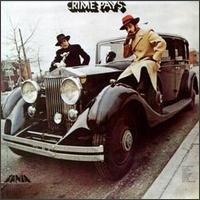
    PRIMERA HORA > ASIcrimepays.jpg (11712 bytes)
    WEDNESDAY, February 4  2004
    Since his musical beginnings,   Willie Colón's image was associated with that of an intrepid, sage, and fearless boy who –forced himself a space among the big names of Caribbean music, in the complex world that was the New York City of the 60s. 

    Before the astonished look of those responsible for the Latin sound of the era, this young neophyte, a "nameless", unknown figure in the field of popular music and, particularly, a musician of scarce resources, strange, inexperienced and foreign.
    At first he was admonished and censured for his strong, strident style. He was even accused of being un-harmonic by the veterans of Latin music. 
    Some say teasingly, that he earned his nickname of "El Malo" (Bad Boy) as an epithet  referring to his interpretive capacity on the trombone when he made his first appearance on the musical stage, at fifteen years of age. Others say it was because he was a brawler.
    Bronx-born of Puerto Rican grandparents, William Anthony Colón Román was born April 28, 1950 in the South Bronx. He learned very early in his adolescence to address the negative stereotypes that are foisted upon the latin  community and the raw reality of the immigrant in the "The Big Apple".   
    Willie’s artistic work became a most compelling social testimony dressed in music, with memorable lyrics that related the stories of  marginality, prejudice, poverty and misery. 
     Although there were other musicians of the era that endeavoured to work the same thematic line, nobody better than he knew how to conjugate in harmonies the pain and loneliness of the diaspora. 
     His music simultaneaously reflects a rhythmic traditional lyric, the lament of farewell and the hope of a new generation forced to abandon their homeland to be congregated in the American metropolis.
     Willie Colón is, without doubt, a painter of the faces of his people, an artist that expressed in his songs –above all with a his strong sound– the conscience of a generation that demanded social respect and that fought for a validation of its humanity. 
    A WISE MAN AMONG GENIUSES
    Willie Colón, The musician and arranger,   took his first steps in the arts as a trumpetist until he developed a fascination with the work of Mon Rivera and Rivera’s use of   the trombone in the interpretation of the Puerto Rican folkloric rythms of Bomba and Plena.. 
    His musical passion, on the other hand, he derived from his grandmother, who raised him whispering the melodies of  her Puerto Rican homeland, planting in him a fascination with the typical rhythms of the country.  
    Early in 1965, this intrepid youth launched himself to the streets to test his talent, during New York’s Latin American music craze, where Tito Puente, Charlie Palmieri, Eddie Palmieri, Larry Harlow and Ray Barretto, ruled. 
    In 1967, when he was 17 years old, he joined a group of artists that formed part of the nucleus of Jerry Masucci talent pool and who were responsible for creating the boom and the new record label that would unite new Latin American musical expression: Fania Records. 
    The arrival of Willie Colón to this group marked the most significant moment of  Salsa, in fact it was the most impacting and identifiable point of departure in the development  of this new musical expression, it was the attempt to homogenize the works that for many years were created in the latin american world of New York, as part of a new sonorous proposal. 
    In that context, the glory of Willie Colón rested in his capacity to devise the precise sound that symbolized the new rhythmic time,   because of it’s broad social acceptance it became the representation of Latin America.  Nobody better than he could harmonize the musical tendencies of the Anglo-saxon world with the "old" latin american school of the mambo, the pachanga, the cha-cha-chá and the guaracha, adding the nostalgia of the traditional puerto rican sound, that is etched in Puerto Rican folkloric music of the bomba and the plena. 
    The great success off Willie Colón’s grandiose musical project is owed, in great measure, to his partnership with a singer from Ponce, Héctor Lavoe, with whom he created the most  important  duo in the Salsa genre. 
    Together with the "Singer of Singers"(Hector LaVoe), he elevated his proposal to the highest echelons of the musical scene. Above all because of his assertiveness in projecting  a new musical concept that combined the wry and piercing tone of LaVoe’s voice and his attachment to the traditional melodies of Puerto Rico, with the passion of daring young trombonist’s and his ability to project the nostalgic sound of the roots of Puerto Rican music with the aggressive, strong sound of the urban world that surrounded them. 
    During the seven years that the union of Willie Colón and Héctor Lavoe lasted, Salsa reigned and prospered.  The formula for success was to embrace the established rhythmic patterns of the day in order to mark the tempo of the new time for Salsa, armed with modern compositions and New York slang and embellished with the familiar, typical phrases of rural Puerto Rico.


    • Translated from Spanish:
      History of Salsa Project, a special series for PRIMERA HORA
      Director General: Jorge Cabezas Villalobos
      Editor: Hiram Guadalupe Pérez
      Supervisor Gráfico: Diego Méndez Hernández
      Ilustrador: Gary Javier
      Artista Gráfico: Omar A. Cadena Negrón
      Audio y vídeo: www.primerahora.com